CBAM 2025: Navigating the Shift from Reporting to Financial Compliance
Charlotte Anne Whitmore
28 Nov 2025
•
12 MIN READ
Introduction
The European Union’s Carbon Border Adjustment Mechanism (CBAM) is a transformative trade and climate policy designed to prevent “carbon leakage” and ensure that imports face equivalent carbon costs as EU-produced goods. From 1 October 2023 through the end of 2025, CBAM is in a transitional reporting phase, requiring EU importers of covered goods to report embedded greenhouse gas (GHG) emissions. From 2026 onward, in its definitive phase, importers must purchase and surrender CBAM certificates corresponding to these emissions.For exporters to the EU, including non-EU producers, CBAM represents both a compliance challenge and a strategic opportunity to position themselves as low-carbon suppliers.
What is CBAM?
The European Union’s Carbon Border Adjustment Mechanism (CBAM) ensures that carbon intensive imports — such as cement, iron & steel, aluminium, fertilisers, electricity, and hydrogen — face a carbon cost comparable to EU domestic production. This prevents EU producers from being undercut by imports from countries with weaker carbon pricing regimes.During the transitional reporting phase, EU importers of covered goods must report the greenhouse gas (GHG) emissions, measured in CO₂ equivalent, embedded in those goods.
Key Changes in 2025: From Reporting to Financial Compliance
1. Registration, Reporting & Authorisation
Importers must register in the CBAM Registry and maintain accurate emissions records. Importers expecting to import covered goods under the definitive regime should seek authorisation as an “authorised CBAM declarant” ahead of 1 January 2026. Only authorised declarants can import CBAM-covered goods in the definitive phase.2. Financial Liability for 2026 Imports
The definitive phase begins on 1 January 2026. Importers will be required to purchase and surrender CBAM certificates covering the embedded CO₂ equivalent emissions in their goods. (Note: the sale and surrender of certificates for 2026 imports may be deferred to 1 February 2027 under the latest simplification measures.) The certificate price is linked to the EU ETS allowance price, making carbon a real cost factor for imports into the EU market.3. De Minimis Exemption & Simplified Compliance
Importers whose annual net mass of covered goods — cement, iron & steel, aluminium, fertilisers — does not exceed 50 tonnes are exempt from full CBAM obligations. Electricity and hydrogen imports are excluded from this exemption. Default emissions values and simplified quarterly reporting may apply in some cases, but using actual verified emissions data is strongly recommended to reduce costs and improve accuracy.4. Data Readiness & Supply Chain Engagement
Verified emissions data from suppliers becomes critical. Incomplete or inaccurate data may trigger the use of higher default emission values, increasing CBAM certificate costs. Non-EU producers and supply-chain partners must proactively ensure accurate, verifiable data is available.
Implications for Exporters and Supply Chains
Cost and Competitiveness Risk
- Under the definitive CBAM regime, embedded greenhouse-gas emissions translate directly into financial costs for importers through the purchase of CBAM certificates. Exporters from countries with weak or no carbon pricing may face higher costs, which can reduce profit margins or affect competitiveness in the EU market.
- This creates a strong incentive for exporters to evaluate their carbon footprint and identify cost-effective ways to reduce emissions across the production process. Failure to do so could result in price disadvantages compared to low-carbon suppliers.
Supply Chain Data Management and Compliance
- Accurate and verifiable emissions data is critical. Exporters must collaborate closely with EU importers to provide reliable information on both direct (Scope 1) and, where applicable, indirect (Scope 2) emissions.
- Incomplete or unverified data forces importers to apply default emissions values, which are often conservative and higher than actual emissions, increasing the CBAM certificate cost. Non-EU producers must proactively engage their supply chains to gather, verify, and document emissions data to minimize financial exposure.
Strategic Opportunity through Low-Carbon Products
- While CBAM introduces compliance challenges, it also creates a strategic opportunity. Exporters who can demonstrate low-carbon, verified production processes can position themselves as preferred suppliers in the EU market. Early investment in energy efficiency, renewable energy use, or low-emission materials can reduce CBAM costs and enhance market competitiveness.
Strengthening Supply Chain Resilience
- CBAM emphasizes transparency and traceability of emissions throughout the supply chain. Exporters who establish robust systems for emissions tracking not only comply with CBAM more effectively but also strengthen overall supply chain resilience. This can benefit other regulatory reporting obligations (e.g., EU Taxonomy, CSRD) and improve relationships with environmentally conscious buyers.
Long-Term Business Planning and Risk Mitigation
- CBAM is likely the first of several international carbon-adjustment mechanisms. Companies that integrate carbon accounting into long-term planning gain a first-mover advantage and reduce exposure to potential future trade restrictions or tariffs based on carbon content. Strategic carbon management can therefore become both a risk-mitigation tool and a competitive differentiator.
Key Actions to Take Now (2025)
As the EU’s Carbon Border Adjustment Mechanism (CBAM) moves closer to its definitive phase in 2026, businesses exporting to the EU must act now to prepare. The transitional reporting period provides an opportunity to assess exposure, gather accurate emissions data, and implement strategies to manage costs and compliance efficiently. Taking proactive steps today not only ensures smooth entry into the financial compliance phase but also positions companies to gain a competitive advantage in a market that increasingly values transparency, sustainability, and low-carbon products.1. Identify Scope and Exposure
- Determine whether your goods fall under CBAM-covered categories: cement, iron & steel, aluminium, fertilisers, electricity, and hydrogen.
- Assess the volume of exports to the EU and estimate the potential emissions exposure to understand which parts of your supply chain are most impacted.
- Consider future EU expansion of CBAM coverage, including indirect emissions and new sectors, to plan proactively.
2. Gather Verified Emissions Data
- Map your production processes, energy use, and materials sourcing to calculate emissions accurately.
- Collect verified emissions data from all suppliers, including direct (Scope 1) and, where applicable, indirect (Scope 2) emissions.
- Implement robust data management and documentation processes to ensure traceability, transparency, and regulatory compliance.
3. Model Cost Exposure and Scenarios
- Estimate potential CBAM certificate costs under various emissions and EU ETS price scenarios.
- Evaluate how default emissions values could impact costs if data is missing or unverified.
- Integrate CBAM costs into pricing strategies, contracts, and long-term financial planning to avoid surprises.
4. Engage Proactively with EU Partners
- Share verified emissions data with EU importers to ensure smooth reporting and compliance.
- Collaborate with supply chain partners to improve data quality and reduce reliance on conservative default emission values.
- Strengthen partnerships with EU buyers by demonstrating commitment to transparency and sustainability.
5. Implement a Decarbonisation Strategy
- Invest in energy efficiency, renewable energy, and low-carbon materials across production and supply chains.
- Explore process innovations, alternative fuels, and circular economy approaches to reduce embedded emissions.
- Early emission reductions not only lower future CBAM costs but position your company as a preferred low-carbon supplier in the EU market.
6. Integrate CBAM into Risk Management and Strategic Planning
- Treat CBAM as part of broader climate compliance and ESG strategy.
- Monitor regulatory updates, sectoral expansions, and changes in EU ETS prices to adjust plans dynamically.
- Use carbon management as a competitive differentiator, leveraging verified low-carbon products to win new contracts and enhance brand reputation.
7. Prepare for Long-Term Reporting and Compliance
- Develop internal systems for continuous emissions monitoring and reporting
- Train staff and supply chain partners on CBAM requirements, reporting standards, and verification protocols.
- Consider external verification or auditing to strengthen credibility and reduce potential penalties.
Conclusion
The shift of CBAM from a reporting framework to full financial compliance represents a pivotal moment for global trade. Embedded carbon in exported goods will now carry real costs for EU importers, which can indirectly influence competitiveness, pricing, and margins for exporters.2025 is the critical year to prepare: collect verified emissions data, engage supply chains, and implement decarbonisation strategies. Companies that take proactive steps can transform CBAM from a regulatory challenge into a strategic advantage, positioning themselves as trusted, low-carbon suppliers in the EU’s evolving sustainable market.
More Insights
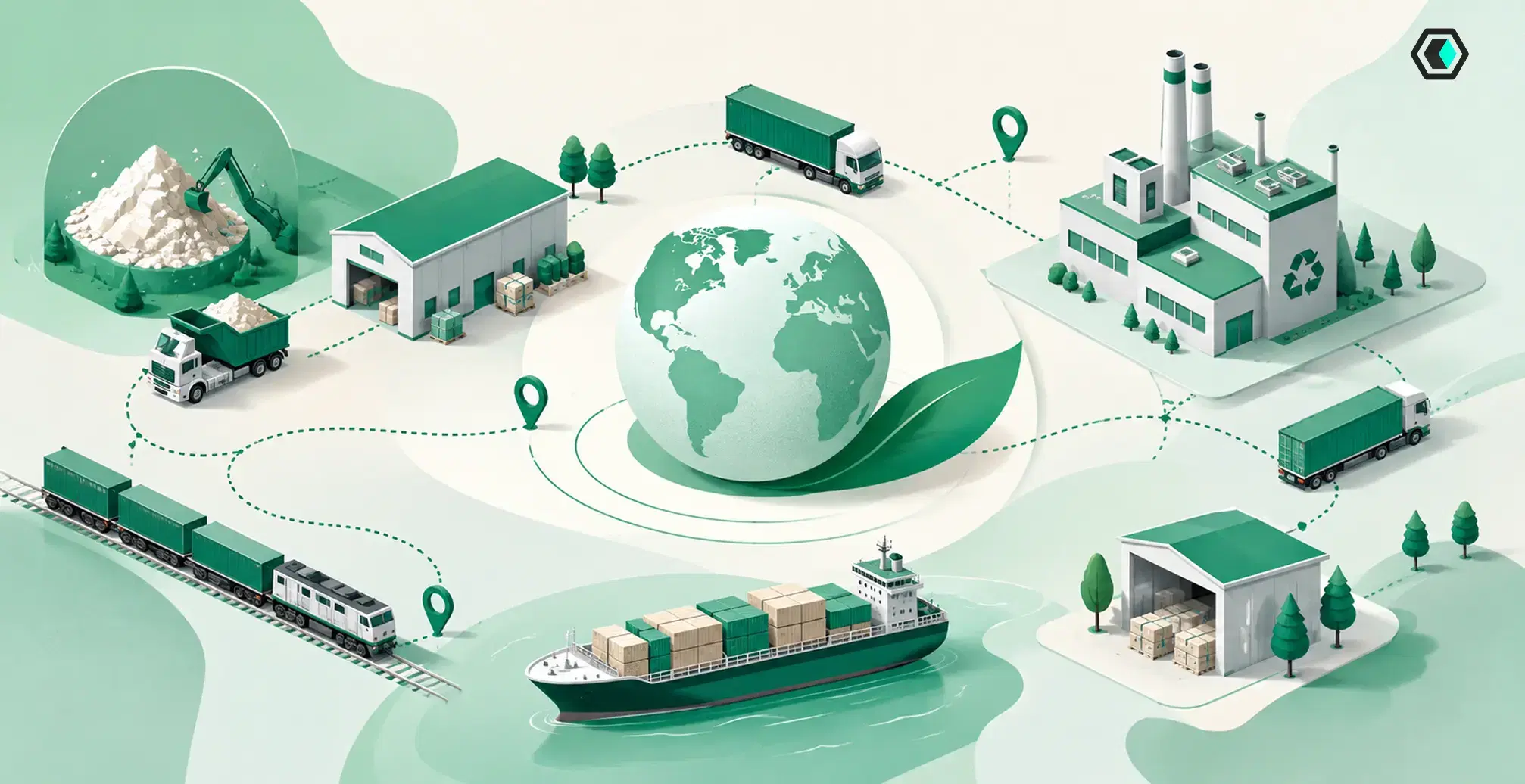
Product Carbon Footprint (PCF)
How to Calculate Transport Emissions in a Cradle-to-Gate Product Carbon Footprint
Learn how to calculate transport emissions within a cradle-to-gate Product Carbon Footprint (PCF). This blog covers transport boundaries, activity data,...
Product Carbon Footprint (PCF)
3 Product Carbon Footprint Mistakes That Can Leave Reports Outdated After a BOM Change
Learn how BOM changes can affect a Product Carbon Footprint and when an existing PCF may need to be reviewed...
Product Carbon Footprint (PCF)
Primary Data vs Secondary Data in Product Carbon Footprints: What's the Difference?
Primary and secondary data play different roles in building a Product Carbon Footprint (PCF). This blog explains the key differences,...
Fueled by intelligent systems to elevate your reading experience.