Why Two Identical Products Can Have Completely Different Carbon Footprints And What Manufacturers Need to Do About It

01 JUNE 2026
•
13 MIN READ
Introduction
Two manufacturers make the same aluminium bracket. Same alloy. Same dimensions. Same production process. One reports a product carbon footprint of 4 kg CO2e per kilogram. The other reports 20 kg CO2e per kilogram. A procurement team sees both numbers. They assume the second manufacturer is running a dirtier operation.
They may be wrong. The difference has nothing to do with process efficiency. It comes entirely from the electricity source used to smelt the primary aluminium each manufacturer purchased. Primary aluminium produced using hydropower typically carries a carbon footprint of approximately 3–6 tonnes CO2e per tonne.The same aluminium produced using coal-fired electricity carries approximately 20–22 tonnes CO2e per tonne. Same product. Same metal. A carbon footprint three times higher, not because of anything the manufacturer did, but because of where their raw material came from.
This is not a marginal edge case. It is a structural feature of how product carbon footprints work, and it has direct consequences for how manufacturers interpret competitor numbers, respond to customer comparisons, and make sourcing decisions. Understanding why identical products carry different PCFs is the prerequisite for using carbon data intelligently, whether that means defending your own number or improving it.
Reason 1 — The Raw Material Source Is Different
The single largest driver of PCF variance between otherwise identical products is the emission intensity of the raw materials used, specifically the production route and energy source behind those materials.
The emission factor for aluminium produced with renewable hydropower is very different from aluminium smelted with coal-fired electricity. For most manufactured goods, the raw material extraction and processing stage contributes the largest share of the total PCF, and it is the stage where supplier-specific data makes the greatest difference.
The aluminium example is the most numerically striking, but the same principle applies across material categories. Steel produced via electric arc furnace using renewable electricity carries a meaningfully lower footprint than steel produced via blast furnace using coal. Recycled content changes the number significantly: the carbon footprint of primary aluminium varies between less than 4 tonnes CO2e per tonne in hydropower-based regions to more than 20 tonnes CO2e per tonne in coal power-based regions, while post-consumer recycled aluminium carries approximately 0.5 tonnes CO2e per tonne, a figure that covers the full recycling process including scrap collection, transport, sorting, and remelting.
For a manufacturer purchasing primary aluminium from a supplier in a coal-heavy grid versus a supplier using hydropower, the PCF of the finished product will differ dramatically, even when the manufacturing process at the finished goods level is identical in every respect.
The practical implication: when a customer compares your PCF against a competitor's, the most important question to ask is whether both calculations used supplier-specific raw material data or secondary industry averages. If your competitor used a global average emission factor for steel or aluminium while you used supplier-specific data from a high-carbon source, their number will look better, not because their supply chain is cleaner, but because their data is less precise.
Reason 2 — The Manufacturing Facility's Electricity Grid Is Different
Two manufacturers running identical production lines in different countries will report different Scope 2 emissions, and therefore different PCFs, simply because the carbon intensity of their electricity grid differs.
Coal-fired power plants carry a median lifecycle emission intensity of around 820 g CO2e per kWh according to IPCC data. By comparison, the IPCC reports that hydropower has a median greenhouse gas emission intensity of 24 g CO2e per kWh across its lifecycle. A manufacturer whose factory runs on a predominantly coal-based grid and a manufacturer whose factory runs on predominantly renewable electricity will show very different manufacturing-stage emissions in their PCF, for the same production output, using the same machinery, consuming the same number of kilowatt-hours.
This is the Scope 2 component of the PCF. Under the GHG Protocol Scope 2 guidance, manufacturers can calculate this using either the location-based method, which uses the average emission factor of the national or regional grid, or the market-based method, which uses the emission factor of the specific electricity contract or certificate the manufacturer has purchased.
Two suppliers with identical physical processes can show very different PCFs depending on their energy accounting approach. How a supplier treats electricity, through renewable energy certificates, location-based grid averages, or claimed power purchase agreements, can swing a PCF dramatically.
A manufacturer in Norway, where the electricity grid is predominantly hydropower-based, will report substantially lower manufacturing-stage Scope 2 emissions than a manufacturer in Poland, where coal remains the largest single source of grid electricity, even for identical products and processes. This geographic energy effect is real and significant. It is not a methodology error. It reflects an actual difference in the carbon intensity of the energy consumed. But it is also not a reflection of process efficiency, product design, or manufacturing capability.
Reason 3 — The System Boundary Is Defined Differently
One of the most common sources of apparent PCF divergence between manufacturers is a different system boundary choice, specifically whether the PCF covers cradle-to-gate or cradle-to-grave, and what each study included within those definitions.
A cradle-to-gate PCF covers emissions from raw material extraction to the point the product leaves the manufacturer's facility. A cradle-to-grave PCF extends through customer use and end-of-life disposal. For products with a significant use phase, such as machinery, electronics, appliances, and vehicles, the difference between these two boundaries can change the total PCF number by an order of magnitude.
End-of-life assumptions can double or triple the number. Cradle-to-gate and cradle-to-grave are both valid, but comparing one against the other is meaningless. Always confirm the system boundary before using a PCF to compare suppliers.
Within cradle-to-gate PCFs, further boundary differences create variance. Whether packaging is included or excluded, whether upstream transport of raw materials is captured, whether capital equipment emissions are allocated to the product, each of these decisions affects the final number. Two manufacturers can both correctly follow ISO 14067 and still produce different PCF figures for the same product if their system boundary decisions differ in these areas.
This is why the methodology statement accompanying a PCF is as important as the number itself. A PCF figure without a clear statement of system boundary, functional unit, and included lifecycle stages is not comparable to any other PCF figure, regardless of how accurately each calculation was performed.
Reason 4 — One Uses Primary Supplier Data, the Other Uses Secondary Averages
The data type used for each input in the PCF calculation is a major source of numerical divergence between otherwise similar products.
Primary data is supplier-specific, activity-based information, which is the actual energy consumption, material weights, and process parameters from the specific facility producing the input. Secondary data is drawn from emission factor databases, using industry-average figures for a given material or process category.
Industry evidence consistently shows that a large proportion of suppliers are at the early stages of their PCF journey and are unlikely to have easy access to required primary data or useful secondary emission factors, and may not feel equipped to engage their own suppliers for the essential upstream PCFs needed to support PCF creation.
A manufacturer that has invested in collecting primary emissions data from its key material suppliers will produce a PCF that reflects the actual carbon intensity of its specific supply chain. A manufacturer that used industry-average secondary factors for the same materials will produce a PCF that reflects the statistical average of the entire sector, which may be higher or lower than the actual intensity of either manufacturer's specific suppliers.
If one manufacturer sources steel from a particularly efficient producer and uses supplier-specific data to capture that efficiency advantage, its PCF will be lower than a competitor that sources from the same producer but used a sector-average emission factor instead. The actual underlying emissions are identical. The reported PCF diverges because one study used better data.
This creates a paradox that procurement teams need to understand: a manufacturer with a higher PCF may actually have a lower-carbon supply chain than a competitor with a lower PCF, if the higher number reflects accurate primary data and the lower number reflects an optimistic secondary average.
Reason 5 — Recycled Content Is Handled Through Different Methods
How a PCF study accounts for recycled content in purchased materials is a methodological decision that can produce significantly different results for the same physical product.
ISO 14067 describes several approaches to recycled content accounting, the two most commonly applied being the cut-off method and the avoided burden approach. Under the cut-off method, recycled materials enter the system burden-free. The emission factor applied covers only the recycling process itself, not the original primary production burden. Under the avoided burden approach, the original product at end of life receives a credit for providing recyclable material to the next life, while the product in the next life takes a burden equal to the virgin production it displaced.
For a product that contains significant recycled aluminium, steel, or plastic content, the choice between these approaches changes the PCF figure substantially. A manufacturer using the cut-off method and a manufacturer using the avoided burden approach will report different numbers for a product with identical recycled content, not because the physical product or its supply chain differs, but because they applied different accounting conventions to the same material flows.
The problem compounds when customers compare PCFs across suppliers without knowing which method each used. A lower PCF built on the avoided burden method may actually reflect a less sustainable sourcing decision than a higher PCF built on the cut-off method, if the underlying recycled content percentages differ between suppliers.
ISO 14067 requires the chosen method to be documented and disclosed in the methodology statement. If a competitor's PCF does not state which method was used for recycled content, the number is not interpretable for comparison purposes.
Reason 6 — The Functional Unit Is Defined Differently
The functional unit, which is the reference measure to which all inputs and outputs in the PCF are normalised, determines what the PCF number actually describes. Two manufacturers reporting for products with different functional units are reporting different things, even if both describe their output as a PCF for the same product type.
A steel component manufacturer reporting per kilogram of finished part and a competitor reporting per unit of installed component are using different reference measures. If the components have different masses because one design is more material-efficient than the other, the per-kilogram figure will favour the lighter design while the per-unit figure will produce a different ranking. Neither number is wrong. They are answering different questions.
This matters most in procurement comparisons. When a customer receives PCF data from multiple suppliers and ranks them, the ranking is only valid if every supplier used the same functional unit. If suppliers were not given a specified functional unit as part of the data request, it is almost certain that at least some of them chose different reference measures, and the resulting comparison is not meaningful regardless of how precisely each individual calculation was performed.
What These Six Differences Mean for Manufacturers in Practice
Understanding why PCFs diverge changes how manufacturers should read a number that looks unexpectedly high or low, whether it is their own or a competitor's.
When your PCF looks higher than a competitor's
Before assuming your supply chain is less efficient, check the methodology on both sides. Confirm that the same system boundary was used, that both studies used the same functional unit, and that the data type, whether primary or secondary, is comparable. A higher PCF built on primary supplier data is more credible and more useful than a lower PCF built on optimistic secondary averages. The higher number may be the more accurate reflection of a genuinely comparable supply chain.
When a customer questions your PCF number
The response starts with the methodology statement. Walk through the system boundary, the data sources, the emission factors used, and the recycled content method. If the customer's comparison is based on a competitor's PCF that used a different boundary, different data type, or different recycled content method, the comparison is methodologically invalid. That is a defensible position, but only if your methodology is clearly documented.
When you are making sourcing decisions based on carbon data
The six factors above all point toward the same upstream variable, which is the emission intensity of purchased raw materials, specifically where they were produced and what energy was used to make them. Most of the cradle-to-gate carbon footprint for primary aluminium falls in the range of 4.5 to 22 tonnes CO2e per tonne. That is a nearly fivefold range for the same material from different origins. Switching raw material supplier based on energy source is frequently the single highest-impact decarbonisation lever available to a manufacturer, more impactful than any internal energy efficiency measure applied to the manufacturing stage.
The Practical Implication for Carbon Data Strategy
A PCF will always contain variables, including renewable energy accounting, system boundary decisions, and data types, that make direct comparison between suppliers unreliable unless methodology is explicitly aligned. The solution is not to avoid using PCFs for comparison. It is to specify, before data collection begins, which system boundary applies, which functional unit will be used, which recycled content method is required, and whether primary or secondary data is acceptable for each input category.
When those parameters are fixed in advance and applied consistently across all suppliers in a comparison, the resulting PCFs are genuinely comparable, and the differences between them reflect real differences in supply chain carbon intensity rather than methodological divergence.
The six factors covered in this blog are not problems to be solved by choosing a better calculation tool. They are variables to be understood, documented, and managed as part of building carbon data that is actually useful for the decisions manufacturers need to make. A PCF that can be explained, defended, and compared is worth significantly more, both commercially and operationally, than one that simply produces a number.
More Insights

PCF Allocation Methods: How to Split Factory Energy Across Products
This blog explains how manufacturers can allocate shared factory energy across products to calculate reliable Product Carbon Footprints (PCFs). It...
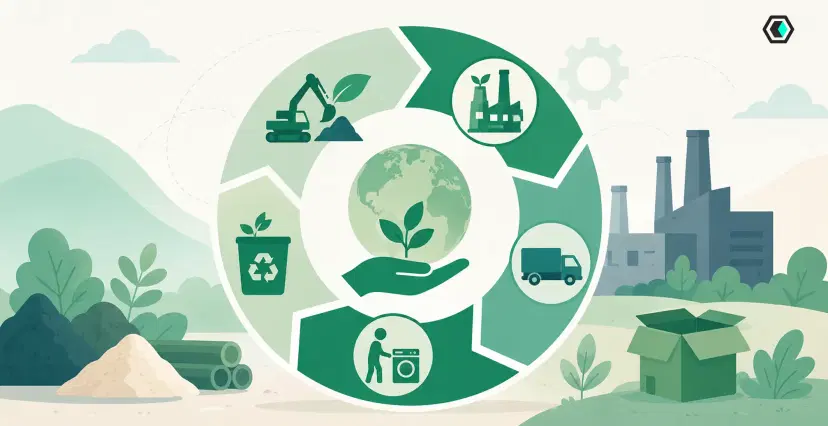
The Product Lifecycle Stages That Drive the Most Carbon Emissions
This blog explains how each product lifecycle stage contributes to a product's carbon footprint, from material acquisition and production to...
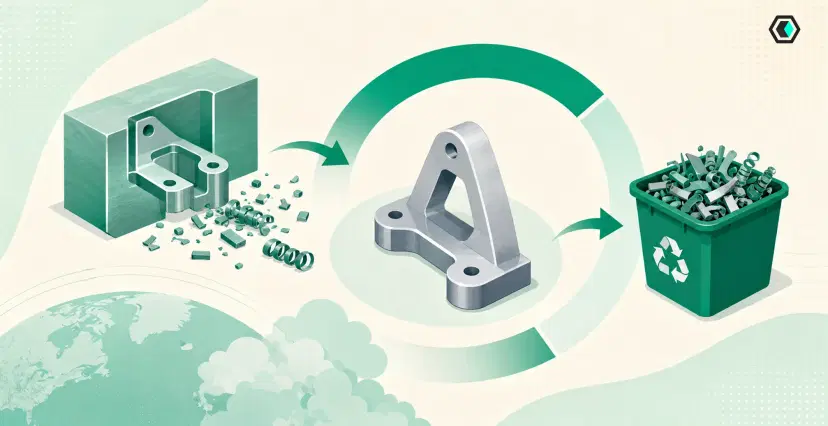
Net Weight vs Gross Weight in a BOM: Why Scrap Changes Your PCF
Net weight and gross weight represent different aspects of material use in a BOM, and that difference matters when calculating...
Fueled by intelligent systems to elevate your reading experience.